


Change, Change, & Change: The Pharma Industry’s Outlook & Response

The bio/pharma industry faces geopolitical uncertainties, fluid trade conditions, and greater product and supply-chain complexity. What lies ahead for bio/pharma companies and suppliers? An outlook for the industry.
By Patricia Van Arnum, Editorial Director, DCAT, [email protected]
What lies ahead
Change is the operative word for the bio/pharmaceutical industry today. Always facing the risk and rewards of drug development and with greater product complexity, the industry has more layers to add to the mix: geopolitical uncertainty, a still very fluid tariff/trade situation, leadership changes and policy resets at the US Food and Drug Administration, moves to US drug pricing reforms, and evolving competitive forces globally in Europe and Asia. A basic question arises: how will the industry perform amid these dynamics, and how can bio/pharma companies and their suppliers best adapt?
To address these questions, industry executives and thought leaders will provide business intelligence and insights at the education programs at DCAT Week (March 23–26, 2026), the flagship event of theDrug, Chemical & Associated Technologies Association (DCAT) and the premier event for the global bio/pharmaceutical business ecosystem. Further information on the full schedule of programs, including how to register, may be found here. The programs are exclusive to DCAT Member Companies.


Market outlook: how is the industry performing?
Bottom line: How did the industry perform in 2025, and what can be expected in 2026 and beyond? To answer those all-important questions, the Pharma Industry Outlook education program (Monday March 23) at DCAT Week will provide valuable insights from leading experts at IQVIA, regarded as the gold standard for business intelligence for the global bio/pharmaceutical industry. Graham Lewis, Vice President, Global Pharma Strategy, IQVIA, will provide the latest market data and analysis on overall industry performance, including growth prospects for innovator drugs and generics/biosimilars and for the major developed and emerging markets.
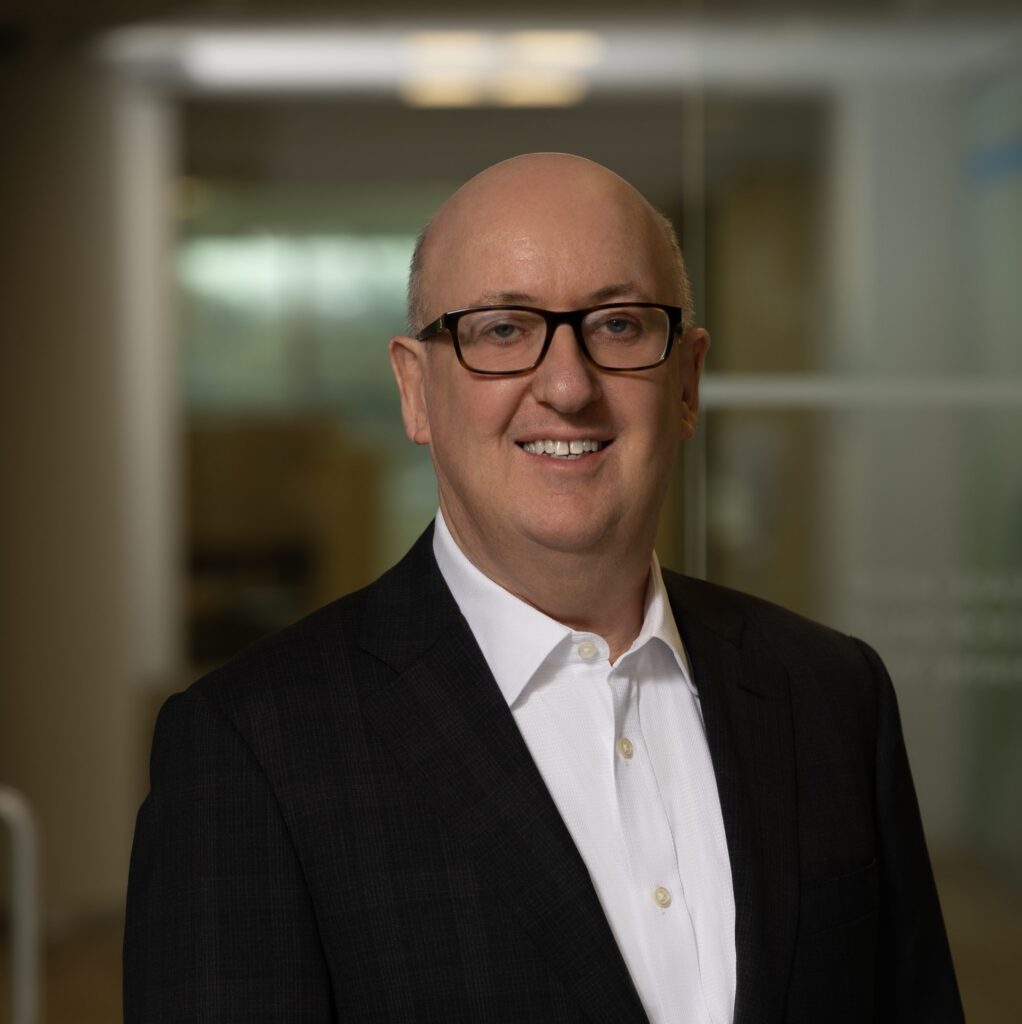
In addition, Murray Aitken, Senior Vice President, IQVIA and Executive Director, The IQVIA Institute for Human Data Science, will provide further insight on the impact of the key policy issues in the US on R&D and commercialization strategies.

Pharma manufacturing: global capacity shifts or not?
One of the results of evolving US tariff/trade policy, which started with the new Administration in 2025 and continues in 2026 has been a wave of announced manufacturing expansions in the US—greenfield projects and expansions of existing facilities for manufacturing, research and development, and other capital projects. Many of the large bio/pharmaceutical companies have announced multi-year and multi-billion capital projects in the US. But are geographic capacity shifts really in the making? If so, what are the implications for bio/pharmaceutical companies and CDMOs and the industry at large?

The DCAT Week education program, Manufacturing Investments, Capacity & Financial Outlook: A Pharma & CDMO View (Tuesday March 24), will provide key insights on this very important issue. Sean P. McKee, Partner, PharmaBioSource, a global life sciences consulting firm focused on pharmaceutical and biotech manufacturing facility and business transactions, will provide an analysis of these US-based manufacturing investments: level of investments, capacity additions, and trends comparative to historical levels. Important questions for CDMOs/CMOs is whether these investments may be influencing insourced/outsourcing decisions as bio/pharmaceutical companies lay out plans for their internal manufacturing networks in the US, and are geographic considerations coming into play in “make-versus-buy” decisions. To gain a perspective on this issue, Daniel Cohen, Managing Director & Global Head of Pharma Outsourcing Investment Banking, Morgan Stanley, will provide a financial overview of the CDMO/CMO sector: overall performance, outlook, and key trends influencing sector performance and valuations.
Bio/pharma companies and suppliers: continuous adaption
Evolving US tariff/trade policy is but one of the many variables that bio/pharmaceutical companies and their suppliers are facing. Global supply chains are always subject to geopolitical uncertainties, fluctuating economic conditions, and changes in trade and government policies, but the pace of that change has accelerated. Add to that the base challenge of increased product and supply chain complexity in the industry, and the need for bio/pharma companies and their suppliers to adapt is ever more important for supply assurance.
An executive panel at the DCAT Week program, Future-Proofing the Pharma Customer–Supplier Relationship (Tuesday March 24) will share lessons learned, best practices, and innovative ways on how they are collaborating to enhance supply-chain visibility and resilience, mitigate risk, and optimize supply planning now and for what may lie ahead. Participating in the panel of are: Xavier De Ceuninck, Category Management Lead, PGS Global Procurement, Source to Pay, Pfizer; Emad Abdelsadek, Vice President, Sales, EMEA, BD Biopharma Systems; Troy Mathews, Executive Director, Direct Materials Strategic Sourcing, Supplier Management & Site Operations, Global Procurement – Global Product Development & Supply, Bristol Myers Squibb; and Sara Henneman, Vice President and General Manager, Cell Culture and Cell Therapy, Thermo Fisher Scientific. The panel will be moderated by Vishal Bhandari, Partner, Healthcare & Life Sciences Practice, Americas, Kearney.

AI and digitalization in supply management
Artificial intelligence (AI) and other forms of digitalization hold great potential in transforming business functions, but where do they really stand in supply management? An executive panel at DCAT Week will share their perspectives on how AI may transform how pharma companies and their suppliers do business.The DCAT Week program, AI & Digitalization: The State of the State in Sourcing, Procurement & Supply Management (Tuesday March 24) will provide practical assessments from bio/pharma company senior executives and leading industry experts of the path AI and other forms of digital transformation are taking and their feasibility for adoption.
Participating in the program are: Bala Sreenivasan, Senior Vice President, Global Supply and Value Chain Management, Merck & Co. Inc; Christina da Cunha, Head of CMO Operations and Business Transformation, External Manufacturing & Supply, Sanofi; and Corwin Hee, Senior Director Analyst, Healthcare and Life Sciences Practice, Gartner. The panel discussion will be moderated by Janel Firestein, Partner and Life Sciences Practice Leader, Clarkston Consulting.

Pharma companies and suppliers: opportunities for value creation
In a highly competitive environment, providing value beyond core deliverables of product and price is crucial for CDMOs and materials suppliers to maintain and gain an edge with their bio/pharma customers, but do bio/pharma companies and their suppliers agree on what constitutes value-added enhancements? What is important? Is it technical proficiency? Operational efficiency? Supply-chain transparency?
An executive panel at the DCAT Week program, Creating Value Beyond Product and Price in the Pharma Customer–Supplier Relationship (Wednesday March 25) will provide a “buy-and-sell-side view” of this very important topic. Participating in the panel are: Vince Ricevuto, Vice President, Research & Development, Facilities, Capital, and Logistics Procurement, GSK; Michael Hoffman, Vice President, Process Engineering and API Clinical Supplies, AbbVie; Paul Smaltz, Senior Vice President, Pharmaceutical Solutions, BASF; and Jason Bertola, Executive Director, Commercial Development, Advanced Synthesis, Lonza.