

FDA: The Changing of the Guard: What May Be Next?
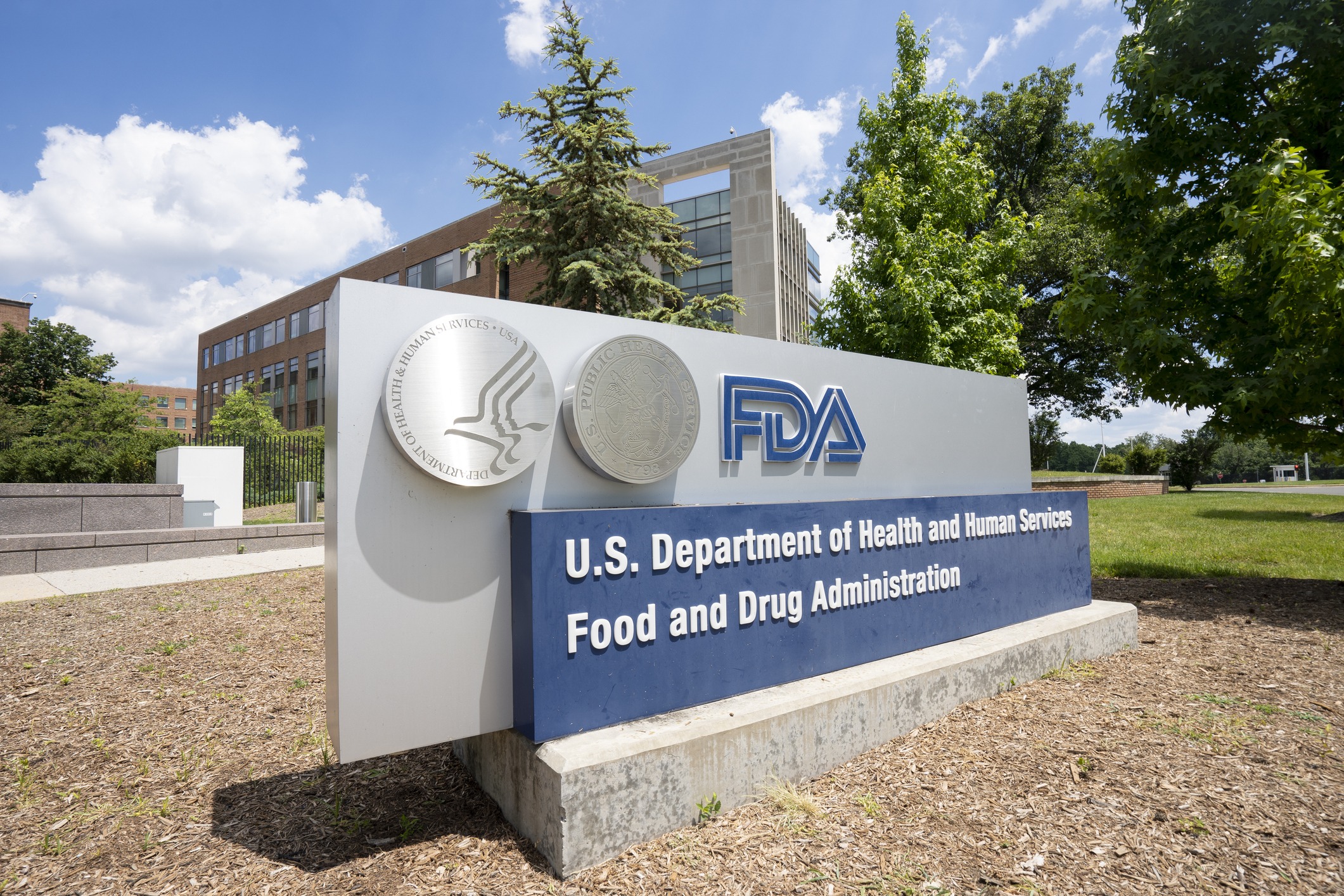
Dr. Marty Makary stepped down this week as FDA Commissioner, marking the latest leadership change at the agency. What may be the policy implications for such a move?
By Patricia Van Arnum, Editorial Director, DCAT, pvanarnum@dcat.org
Following a 13-month tenure with the US Food and Drug Administration, Martin A. Makary, M.D., M.P.H., stepped down as FDA Commissioner this week (May 12, 2026). Kyle Diamantas, former Deputy Commissioner for Food at FDA, where he oversaw FDA’s nutrition and food safety activities, was named Acting FDA Commissioner.
Makary became FDA Commissioner on April 1, 2025, nominated by President Donald Trump, who took office on January 20, 2025, and confirmed by the US Senate. He joined FDA from Johns Hopkins University School of Medicine, where he was a surgical oncologist and chief of Islet Transplant Surgery. He succeeded Robert M. Califf, M.D. , who was appointed under the previous Administration by President Joe Biden and served from February 2022 to January 20, 2025, returning to FDA after previously serving as FDA Commissioner from February 2016 to January 2017.
Markay’s departure from FDA is the latest leadership change at FDA, which has had a number of executive changes since January 2025 in the two centers with regulatory oversight over the bio/pharmaceutical industry: the Center for Biologics Evaluation and Research (CBER), which regulates blood products, vaccines, allergenics, tissues, and cellular and gene therapies, and the Center for Drug Evaluation and Research (CDER), which regulates prescription drugs, both innovator drugs and generic drugs and biosimilars, and over-the-counter drugs.
The most recent change occurred in late April (April 2026), with Vinay Prasad, M.D., CBER’s Director, stepping down for the second time having temporarily leaving the post in July 2025. Since January 2025, there have been five changes in the head of CDER. Last December (December 2025), Beth Høeg, M.D., Ph.D., was named Acting Director of CDER, a position she still holds. She joined FDA in March 2025, first as a Special Assistant and then as Senior Advisor for Clinical Sciences to FDA Commissioner Makary. She had taken over from Richard Prazur, who was named CDER Director in November 2025 and served as CDER Director for a single month. He had taken over from Dr. George Tidmarsh, M.D., Ph.D., who was CDER Director for only a few months having been appointed in July 2025 and leaving the post in November 2025. He had taken over from Jacqueline Corrigan-Curay, M.D., who served as CDER’s Acting Director from January to July 2025 after its former head, Patrizia Cavazzoni, M.D., stepped down earlier in January 2025. Cavazzoni served as Director of CDER from April 2021 to January 2025.
On an industry level, in commenting on Makary stepping down, the Biotechnology Innovation Organization (BIO), the US-based industry association representing the biotechnology industry, called for stability at FDA following a period of change in leadership at FDA and staffing reductions. “…What we need now is strong, stable and science-driven leadership at the FDA…,” said John F. Crowley, President and CEO of BIO, in a May 12, 2026, statement. “FDA must be strengthened immediately to ensure that patients continue to benefit from medical miracles and that the United States leads the world in biomedical innovation, which is crucial for the public health, economic growth and our national security.”
Makary’s reflections on his tenure
Although Makary’s tenure at FDA was short-lived with varied opinions on his policy decisions, in leaving his post, Makary cited what he viewed as some of his significant accomplishments at FDA, including setting a pilot in place to reduce drug reviews times and introducing a plausible mechanism for rare-disease drugs.
Last June (2025), FDA launched a new priority review voucher with the goal of reducing the agency’s drug review times to 1 to 2 months for certain novel drugs. Called the Commissioner’s National Priority Voucher (CNPV), the voucher applies to drugs participating in a novel drug FDA priority program and that meet certain criteria, including consideration for being manufactured in the US. The CNPV process seeks to reduce standard review times for qualifying drugs from 10 to 12 months to 1 to 2 months. It would achieve that by using experts from FDA offices for a team-based review rather than using the standard review system of a drug application being sent to numerous FDA offices. Clinical information is reviewed by a multidisciplinary team of physicians and scientists who pre-review the submitted information and convene for a 1-day “tumor-board style” meeting. The CNPV program does not affect pre-existing expedited review programs, such as fast track designation, breakthrough therapy designation, accelerated approval, and priority review designation. The voucher program applies to drug candidates that align with US national health priorities as identified by the FDA Commissioner. These priorities include, but are not limited to, the following: (1) addressing a health crisis in the US; (2) delivering more innovative cures; (3) addressing unmet public health needs; and (4) increasing domestic drug manufacturing as a national security issue. As of May 6, 2026, seven drugs have been approved under the program.
In February (February 2026), FDA issued what it called the “Plausible Mechanism” draft guidance to create a framework through which treatments tailor-made for patients with ultra-rare diseases can be used as a basis for FDA approval. The guidance is for sponsors seeking approval for targeted individualized therapies by generating substantial evidence of effectiveness and safety when randomized controlled trials are not feasible due to small patient populations. The draft guidance specifically discusses genome editing and RNA-based therapies such as antisense oligonucleotides but leaves open the potential that this framework may apply to additional tailored therapeutics provided they directly address the underlying specific cause of the disease. The draft guidance specifies that because genome editing technologies are designed to be highly specific to unique DNA sequences, a product targeting different mutations in a single gene could be included in a single product application and potentially be evaluated through the use of master protocols that evaluate these product variations in a single trial. A highly supported “plausible” mechanism of action may then be used to support the addition of other such genome editing product variants, intended to treat patients with mutations that were not included in the clinical trial used to support the original approval.