


Next-generation pMDIs: Embedding sustainability across design and development

The first low carbon pressurised Metered Dose Inhaler (pMDI) has hit the market, with more in development. These incorporate next-generation low Global Warming Potential (GWP) propellants that greatly reduce the carbon footprint of pMDIs, marking an exciting yet challenging transition in the inhalation industry. However, next-generation propellants are only one piece of the sustainability puzzle. There are opportunities to decarbonise across the inhalation value chain by optimising materials, improving manufacturing efficiency, adopting advanced virtual technologies, or even by designing more patient-centric devices that reduce hospitalisations.
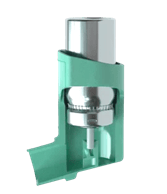
Leveraging decades of experience in nasal and inhaled delivery, Bespak, the specialist inhalation contract development and manufacturing organisation (CDMO), has taken a holistic approach to spearheading the inhalation industry’s green transition. From solving challenges that limit the uptake of next-generation propellants in pMDIs to pioneering digital-first approaches, Bespak is driving innovation across the board to pave the way for a greener tomorrow.
Getting ahead of the curve
One pMDI loaded with 200 doses of medication is estimated to have an environmental impact equivalent to a 290-km car journey (1). Overall, pMDIs account for 3-4% of the UK NHS’ emissions (2). The lion’s share of this is attributed to the hydrofluorocarbon (HFC) propellants traditionally used in these devices, which act as aerosols for drug products to facilitate delivery to the lung.

Growing concern over the damaging environmental impact of traditional HFC propellants in pMDIs is creating significant demand for the low GWP alternatives HFA-152a and HFO-1234ze(E). This is compounded by regulatory pressure as HFCs are phased out of many sectors, shrinking the HFC supply chain. While HFC use for medical applications remains currently exempt from regulatory restrictions in most jurisdictions, the direction of travel for the industry is clear. A delayed or inefficient transition to low carbon pMDIs risks disruption to supplies of vital medicines, making it essential that the necessary infrastructure is in place ahead of regulatory mandates.
Innovating across pMDI development and manufacturing
Switching to low GWP propellants creates upheaval across almost every area of pMDI development and manufacturing, calling for:
- Investment in compatible manufacturing facilities
- Updated protocols for safe handling of HFA-152a due to flammability
- Preparation across the value chain, from scaling propellant supply to releasing updated regulatory guidance
- Device component design updates for compatibility with low GWP propellants
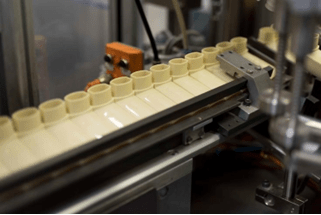
Bespak set out to address each challenge proactively, starting with strategic manufacturing expansions for both low GWP propellants, HFO-1234ze(E) and HFA-152a. This made Bespak the first CDMO capable of commercial filling with low GWP propellants. With this capability, and growing capacity, in place at Bespak, pharmaceutical companies have the choice of manufacturing low carbon pMDIs with either HFO-1234ze(E) or HFA-152a without investing in their own in-house manufacturing equipment, reducing overall risk, in particular to timelines.
To address industry uncertainty with regard to safe handling of the flammable low GWP propellant HFA-152a during manufacturing, storage and transportation, Bespak collaborated with equipment manufacturer DH Industries and HFA-152a propellant supplier Orbia Fluor & Energy Materials. The result was a safe handling guide that acts as a reference point for necessary adaptations to existing processes. More widely, Bespak has forged collaborations across the pMDI value chain to help ensure supply can scale seamlessly with demand.
Finally, as the world’s leading supplier of pMDI valves, Bespak set out to better understand the impact of low GWP propellants on this crucial device component.
Manufacturing the world’s first approved low carbon pMDI valve
Importantly, propellant changes and device componentry cannot be evaluated independently. A pMDI is an interconnected system with various components influencing performance and efficacy. The valve sits at the heart of a pMDI, playing a key role in ensuring consistent doses are delivered and in preventing leakage by forming a reliable seal, so it is vital that its performance is not compromised by switching to a low GWP propellant. Low GWP propellants pose unique device development challenges as alternatives have distinct physical and chemical properties that affect each stage of development and manufacture.
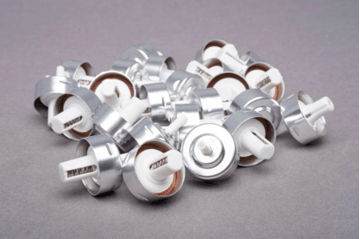
As the world’s leading supplier of pMDI valves, Bespak used its expertise to update the design of its BK357 valve for low GWP propellants, pioneering the world’s first pMDI valve approved in a low carbon product. This is manufactured with materials that have been optimised for next-generation propellants, ensuring consistent valve performance is maintained across both solution and suspension formulations. The new valve design has already been used in the first ever approved low carbon pMDI product on the market, AstraZeneca’s fixed-dose triple-combination therapy for COPD (3).
Applying virtual modelling and advanced simulations
The updated BK357 valve for low carbon pMDIs was developed through advanced modelling and virtual simulation tools, which offer exciting capabilities to both streamline design changes and reduce manufacturing waste.
Bespak leveraged finite element analysis (FEA) modelling and simulation tools to map the product design space of its BK357 pMDI valve. This allowed the Bespak team to put together a clearer picture of when deviations from product specification fall within acceptable limits, preventing unnecessary rejections during manufacturing. It also enabled the team to quickly and easily identify whether proposed changes to the design would have a measurable impact on performance, cutting down on waste generated by physical prototyping and manual testing.
While this innovative design space mapping approach was initially applied to the Bespak valve, it can be used across Bespak’s entire product portfolio, encompassing modelling to predict optimal drug formulation, device design and drug delivery to the lung.
Capturing novel insights with high-speed X-ray imaging
To further grow the industry’s understanding of how next-generation propellants influence the pMDI valve, Bespak leveraged high-speed X-ray imaging. This was able to capture real-time fluid flow inside a functioning pMDI valve at a level of detail not previously possible. The key factor that the team investigated was whether changing the propellant impacted the refill event in the valve – an area that was understudied. After each actuation, the formulation must refill the metering chamber before the next dose can be delivered, and inconsistent refill directly compromises dose consistency.
The research showed that refill performance can vary significantly depending on the propellant, formulation composition and valve geometry. Additives such as ethanol and active pharmaceutical ingredients (APIs) impacted both refill speed and fill levels while valve design could be modified to better match the needs of specific formulations.
For developers working on low carbon pMDIs, this type of insight is highly valuable. Understanding the interaction between formulation and device design early in development is essential to maintaining dose consistency and the resultant clinical outcomes for patients during the transition to low GWP propellants.
Developing an informed decarbonisation strategy
For a truly holistic approach to develop low carbon pMDIs beyond the transition to low GWP propellants, Bespak partnered with Tunley Environmental, a sustainability consultancy, to carry out a cradle-to-gate lifecycle assessment of the BK357 pMDI valve itself. This quantified its total carbon footprint and provided invaluable insights into the most significant emission hotspots across the valve’s supply chain and manufacturing processes so that Bespak could formulate an informed decarbonisation strategy. For example, one of the major findings of the LCA identified that switching to higher recycled-content aluminium grades offered the single largest reduction potential.
Using these insights, Bespak was able to develop a structured, evidence-based decarbonisation strategy capable of reducing the BK357 valve’s carbon footprint by more than 50% by 2027 relative to a 2024 baseline – all while maintaining regulatory compliance, device performance, and patient safety.
Future-proofing with a next-generation integrated dose counter
Further down the value chain, after low carbon pMDI products have been introduced to the market, patients can play a key role in decarbonisation of the full respiratory pathway, in tandem with the continued push to improve health outcomes. A well-controlled respiratory patient has a significantly lower carbon footprint because they require fewer emergency medical visits, rescue medications, and hospitalisations. In fact, patients with poorly controlled asthma can have a carbon footprint up to three times higher than stable, well-controlled patients (4).
In the context of the inhalation industry’s green transition, that means that reformulating products for low GWP propellants represents an excellent opportunity to add an integrated dose counter (IDC) to devices. IDCs safeguard patient health by indicating the number of doses left in a device, helping to ensure that medication is not unexpectedly unavailable when it is needed. They also assist the patient in tracking their use of preventative medication to ensure compliance with their overall symptom control protocol.
Unsurprisingly, the use of dose counters is heavily encouraged in the UK, and EU, with the potential for a mandate in the future, as is the case in the US where dose counters have been required on pMDIs since 2003. As a result, adding a dose counter ensures the latest low carbon pMDIs are future-proofed against potential regulatory change while also supporting improved patient outcomes and helping to reduce the environmental burden of uncontrolled respiratory disease.
To help with this, Bespak has developed an integrated dose counter (IDC) that provides a fully flexible dose-by-dose countdown and customisable design that fits within a standard actuator, ensuring a familiar form factor for patients.

pMDIs: Now optimised for the new era
The green transition is in full swing across the inhalation industry, with uptake of next-generation propellants in pMDIs addressing a major source of environmental impact. Beyond the propellants themselves, however, there are opportunities to consider decarbonisation holistically across every stage of the value chain. By laying the groundwork for a widespread transition to low carbon pMDIs and pioneering a digital-first approach that streamlines development while also reducing waste, Bespak is leading the charge.
References
[1] Fidler, L., et al. (2022). Pressurized metered-dose inhalers and their impact on climate change. CMAJ.
[2] Woodcock, A., et al. (2022). Effects of switching from a metered dose inhaler to a dry powder inhaler on climate emissions and asthma control: post-hoc analysis. Thorax.
[3] Trixeo Aerosphere approved in the UK as first inhaled respiratory medicine using next-generation propellant with near-zero Global Warming Potential. (2025). AstraZeneca.
[4] Wilkinson, A. J. K., et al. (2024). Greenhouse gas emissions associated with suboptimal asthma care in the UK: the SABINA healthCARe-Based envirONmental cost of treatment (CARBON) study. Thorax.
