
FDA Begins Pilot To Incentivize US-Based Pharma Manufacturing
FDA has selected seven companies to participate in the agency’s PreCheck Pilot Program, a new initiative designed to incentivize US-based pharma manufacturing and facilitate operational readiness of greenfield facilities. Which companies were selected, and what does the program entail?
By Patricia Van Arnum, Editorial Director, DCAT, [email protected]
The latest push to US-based drug manufacturing
The US Food and Drug Administration (FDA) has announced the selection of seven companies to participate in the FDA PreCheck Pilot Program, a new initiative designed to boost US-based drug manufacturing and facilitate regulatory review of new pharma manufacturing facilities in the US.
FDA launched the PreCheck Pilot Program on February 1, 2026, in response to an Executive Order signed by President Donald Trump in May 2025 and following a public meeting to discuss the challenges and opportunities to facilitate domestic manufacturing in the US. The pilot program is intended to support the development of new US pharmaceutical manufacturing facilities by encouraging earlier FDA engagement and providing a more predictable regulatory pathway for companies that plan to manufacture drugs for the US market.
Figure 1 highlights the key elements of the program. To be eligible, companies had to propose a new domestic manufacturing facility that will be capable of manufacturing products to address a market supply need or improve patient access to therapies with unmet medical needs. This could include manufacturing facilities that produce sufficient volume to meet a specified market need, which could include, for example, be a small-volume product if it fully meets the needs for a rare disease state with a limited patient population, as well as new manufacturing facilities that contribute significantly to addressing US market supply needs. Eligible companies also committed to submitting a new drug application, biologics license application, abbreviated new drug application, or a supplement to one of those applications that relies on the new manufacturing facility. Companies also commit to actively manufacturing products in the facility assessed as part of the pilot program for at least three years after FDA approval of the products manufactured at that facility during pilot participation.
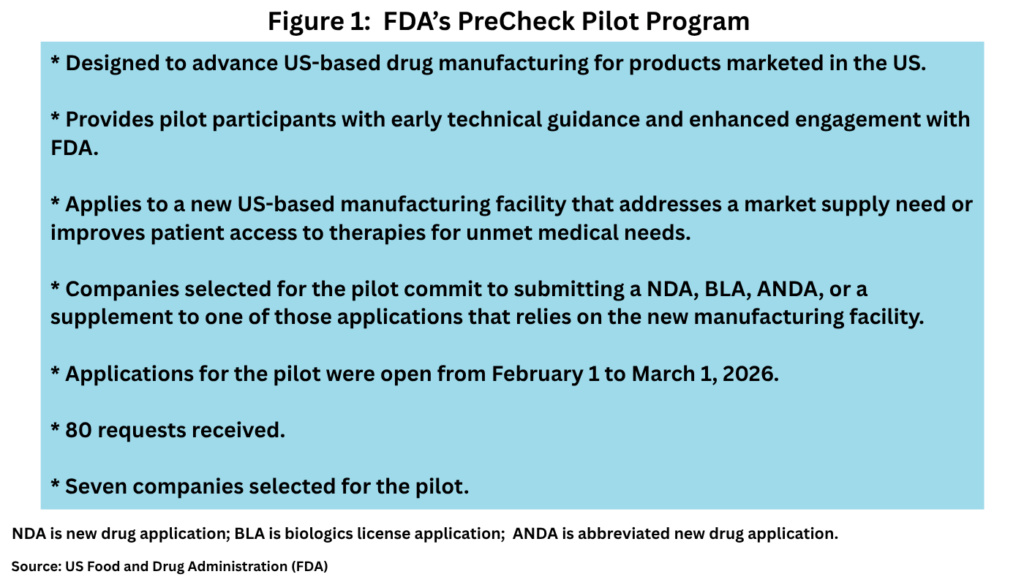
Between February 1 and March 1, 2026, FDA received over 80 requests to participate in the pilot. In evaluating the requests, FDA said it considered several aspects, including the products to be manufactured, the stage of facility development, the anticipated timeline for bringing products to the US market, and innovation in facility development and manufacturing operations. Priority consideration was given to facilities producing products that address drug shortages, critical medicines, or key supply-chain vulnerabilities, such as sterile drug products, large-volume parenterals, or other therapeutically essential medications identified on FDA shortage lists or critical medicine designations. FDA also prioritized companies with past pharmaceutical manufacturing experience, which may be demonstrated through existing commercial facilities, partnerships in place with the appropriate manufacturing experience, or a plan for building the necessary in-house expertise. This included both large and small manufacturers, and CDMOs that have agreements in place with experienced sponsors and a documented willingness to share information with their proposed partner sponsors about the proposed facility.
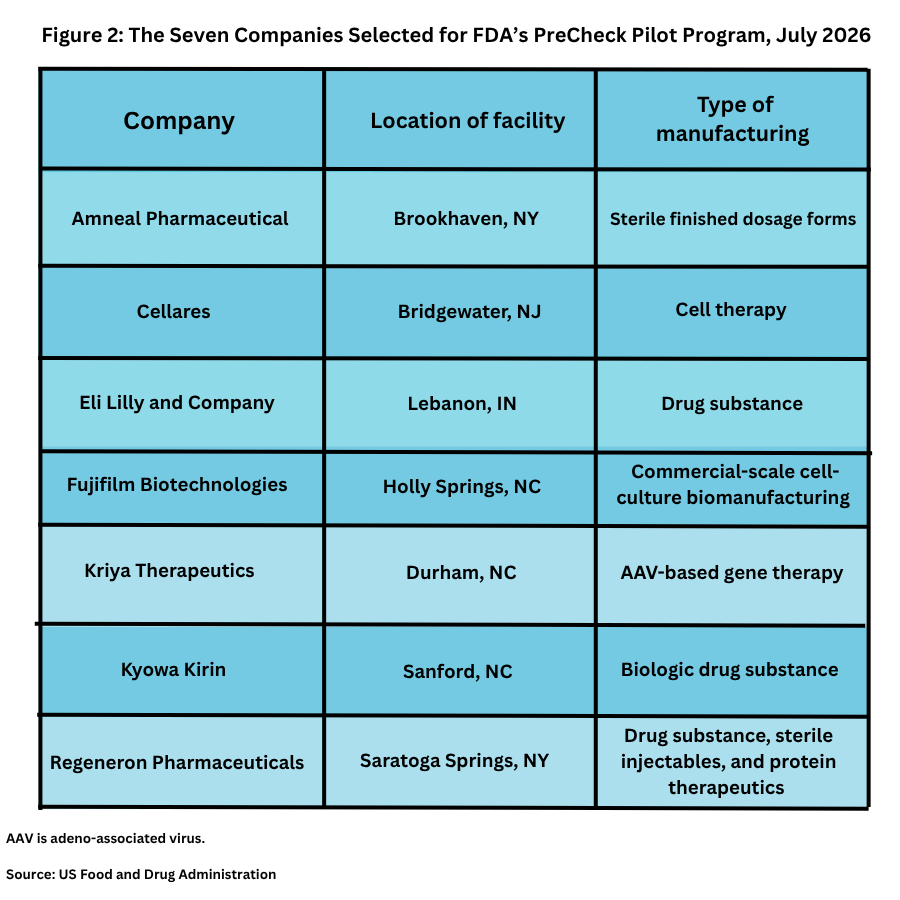
Figure 2 outlines the seven companies—both bio/pharmaceutical companies and CDMOs— that were selected to participate in the pilot. The bio/pharmaceutical companies selected were Amneal Pharmaceutical, Eli Lilly and Company, Kriya Therapeutics, Kyowa Kirin, and Regeneron Pharmaceuticals, Two CDMOs were selected —Cellares and Fujifilm Biotechnologies.
A two-phase PreCheck model
The benefits to companies participating in the pilot are early technical guidance and enhanced communication with FDA using a two-phase PreCheck model. In Phase 1 (facility readiness), participants will receive early technical guidance from FDA before the facility becomes operational, including reviews of facility information submitted through a facility-specific drug master file to allow FDA to assess and help enhance facility readiness before a drug or biologics application is submitted. In Phase 2 (application submission), participants will have opportunities for enhanced engagement with FDA through facility-focused pre-submission meetings, which are intended to support expedited facility evaluation and enable inspections earlier in the review cycle. The PreCheck model seeks to apply FDA expertise and feedback to inform the acceleration of the facility development process from the outset while allowing FDA to identify potential facility issues before they result in deficiencies that could delay or prevent application approval. By facilitating earlier resolution of manufacturing issues, the program is intended to support the timely availability of pharmaceuticals in the US.
Going forward
FDA says it will continue to evaluate implementation of the PreCheck Pilot Program and assess opportunities to inform future program development. The pilot program is serving as a test model to help identify implementation challenges, establish best practices, and inform critical parameters and potential future scalability. FDA says performance metrics and stakeholder feedback will be systematically evaluated to optimize the pilot program’s effectiveness.