

What is Top of the Industry’s Sustainability Agenda in 2026?

Decarbonizing, standardized reporting of value-chain emissions, and coalescing talent and technology are high on the industry’s sustainability agenda in 2026.
Sustainability: a strategic priority
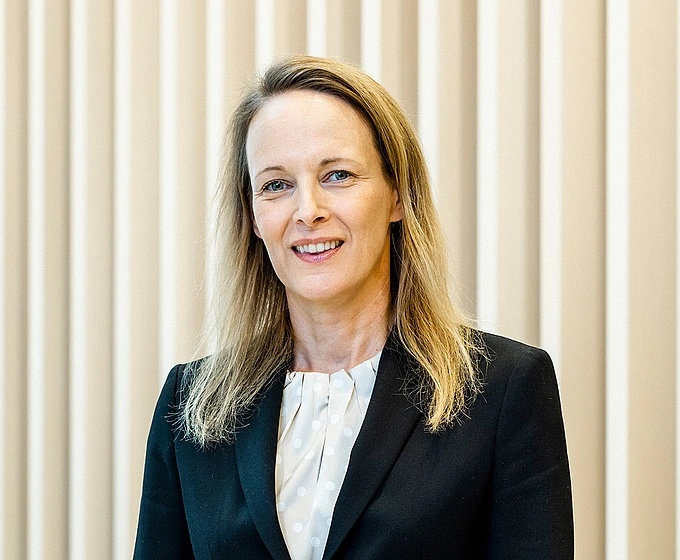
For all industries, including the bio/pharmaceutical industry, sustainability is not only an important part of an ESG (environmental, social and governance) agenda but a strategic priority. To gain a perspective on the top issues facing the industry in 2026 relating to sustainability and ways in which companies are moving forward with their sustainability targets, DCAT Value Chain Insights gained the perspective of Dr. Ute Schleyer, Vice President, Internal Project Management and EHS Sustainability, Vetter, a CDMO of drug product development, clinical, and commercial aseptic filling and packaging. Dr. Schleyer provided her insights in the latest episode of the DCAT Value Chain Insights podcast, Production to Prescription. Listen here.
Operational decarbonization
“The first and still the most complex issue facing the industry is decarbonizing energy-intensive operations,” says Dr. Schleyer. “This includes processes involving heat, steam, cooling and other critical utilities required for GMP-compliant manufacturing. Reliability in pharma is absolutely non-negotiable. The key question for 2026 is not whether we decarbonize these utilities, but how we do it without compromising operational excellence. That is why much of the innovation in 2026 will focus on fuel switching for heat and on electrification where feasible and also on heat recovery to cut load without risking uptime.”
Scope 3 or value-chain emissions: pharma companies and suppliers
Reduction of and common reporting of Scope 3 greenhouse gas (GHG) emissions, or so-called value-chain emissions, is another major issue in sustainability facing the industry. GHG emissions are categorized in three main areas: Scope 1, Scope 2, and Scope 3, according to the Greenhouse Gas Protocol, an organization providing global standardized frameworks to measure and manage GHG emissions.

Scope 1 covers direct emissions that occur from sources that are owned or controlled by an organization (e.g., GHG emissions associated with manufacturing processes, onsite fuel combustion, or company-owned vehicles). Scope 2 emissions are indirect GHG emissions associated with the purchase of electricity, steam, heat, or cooling. Although Scope 2 emissions physically occur at the facility where they are generated, they are accounted for in a company’s GHG inventory because they are a result of an organization’s energy use. Scope 3 includes all other indirect emissions that occur in the upstream and downstream activities throughout a company’s value chain—from raw materials and logistics to products’ endoflife. Scope 3 emissions account for the majority of a company’s GHG emissions, and for purposes of GHG emissions reporting, the GHG emissions of a supplier are accounted for in the GHG emissions reporting of a customer. Therefore, key for bio/pharma companies is to work with suppliers that contribute to their sustainability targets.
However, achieving transparency and standardized reporting of Scope 3 emissions is a challenge across all industries, but particularly for the bio/pharmaceutical industry, which has complex manufacturing and supply chains among sponsor companies/customers and their suppliers.
“Customers increasingly expect high-quality comparable auditable emission data,” says Vetter’s Dr. Schleyer. “Emission data aligned with global frameworks such as the Greenhouse Gas Protocol and the Science-Based Targets initiative for suppliers delivering trustworthy Scope 3 data have become a kind of license to operate. Without reliable emission data, companies simply fail to meet what the market is looking for today.”
The Science-Based Targets initiative (SBTi) is a global body enabling businesses to set emissions reduction targets in line with climate science to limit global warming to 1.5°C (a target set by international agreements such as the Paris Agreement) by providing frameworks, tools, and validation for companies to cut GHG emission with the aim for net-zero emissions by 2050. “Net-zero” emissions refer to a state in which the GHG emissions going into the atmosphere are balanced by their removal out of the atmosphere.
Sustainability: talent development and culture
As much as data and technology play a large role in reaching sustainability targets, talent development and management and building a culture that prioritizes sustainability is key. “We [as an industry] have automation, digitalization, and the enormous potential of artificial intelligence (AI) in improving energy efficiency to support quality and also enabling predictive maintenance,” says Vetter’s Dr. Schleyer. “But technology alone does not transform an organization. What truly makes the difference is the combination of skilled teams with strong governance and a culture that sees sustainability as a strategic priority.”
Sustainability at work
As a case example, Vetter’s Dr. Schleyer outlined key targets and initiatives in sustainability by the company. “Our sustainability approach is built on three main pillars: ecology, economy, and social responsibility, and we align our partnerships and programs accordingly,” she says.
A significant milestone in the company’s sustainability strategy was reached in 2025 when the SBTi validated Vetter’s climate targets. The company’s sustainability targets include reducing its absolute GHG emissions from Scope 1 and 2 emissions by 58.8% compared to its 2021 baseline by 2034, which corresponds to an average annual reduction of 4.52% on a 1.5°C-aligned pathway. The company plans to achieve these reductions through a mix of measures, including the technical modernization of facilities and equipment, expanding renewable electricity production, and leveraging energy-recovery potentials such as waste heat (i.e., reusing heat energy that would otherwise be disposed of or simply released into the atmosphere), and transitioning to low-carbon energy sources, for example, replacing natural gas with biomethane. The company has also set a net-zero emissions target by 2050 across all scopes (Scopes 1, 2, and 3).
To illustrate the progress the company has made in realizing these goals, Vetter’s Dr. Schleyer noted that the company has implemented more than 130 energy-efficiency measures over the past decade to save more than 33 million kW hours of energy. It also uses certified green electricity at its sites in Germany and Austria, which resulted in market-based Scope 2 emissions of zero tons of carbon dioxide in 2025. Also, last year (2025), 54% of the company’s total energy consumption came from renewable resources.
Sustainability and CDMOs
For CDMOs, the setting of sustainability targets, operationalizing these goals, and evaluating performance in sustainability is key not only for their work with bio/pharma company customers but also in working with their suppliers and requires a multi-facet approach.
As an example, Vetter’s Dr. Schleyer further explains the company’s operational and product focus in sustainability. Looking ahead, in operations, the company continues to expand photovoltaics, biogas, and biomethane and high-efficiency combined heat and power units to reduce utilities-related emissions. It is also focused on looking at potential alternatives with its customers to expand paper-based mono material secondary packaging and assesses polyvinyl chloride (PVC)-free or recyclable solutions in pharmaceutical secondary packaging. Also, where regulations allow and whenever feasible, the company uses plastic-free tamper-evident seals and also security labels. To close the loop, the company returns plastic waste and process residues to the material cycle in a single-stream process wherever it is possible.
With respect to governance and the company’s value chain, the company conducts a systematic ESG risk assessment in line with the German Supply Chain Due Diligence Act. This includes comprehensive risk analyses, supplier codes of conduct, and corrective-action processes to improve responsible sourcing and supply-chain resilience.
It also participates in sustainability frameworks that are well established not only in the bio/pharmaceutical industry but across all industries. EcoVadis, a globally recognized sustainability ratings organization that assesses companies on environmental performance, labor and human rights, ethics, and sustainable procurement, and SBTi are two key organizations used by the company in both its sustainability target-setting and evaluation of its sustainability performance. EcoVadis is used by both bio/pharma companies in evaluation of their suppliers, and by CDMOs/suppliers to assess their own supply chain. In 2025, Vetter’s Dr. Schleyer noted that 98.6% of the company’s procurement spend was analyzed with 67 suppliers assessed by EcoVadis scorecards and a further 134 through its human-rights and environmental questionnaire. In December 2025, the company achieved EcoVadis Platinum, placing it in the top 1% of all rated companies.
The company also has certifications for specific standards set by the International Organization for Standardization (ISO), an independent, non-governmental standard-setting organization. These include certifications for ISO 14001 (environmental management systems), ISO 45001 (occupational health and safety management systems) and ISO 50001 (energy management systems). The company also supports the UN Global Compact, a voluntary initiative based on CEO commitments to implement universal sustainability principles and to undertake steps to support United Nations’ goals in areas such as environmental stewardship, human rights, labor standards, and anti-corruption practices.