

Generic Drugs: What’s Next for Viatris?
Viatris, the new company formed from the combination of Mylan and Upjohn, Pfizer’s off-patent branded and generic established medicines business, is proceeding with a $1-billion restructuring initiative, which includes a rationalization of its manufacturing footprint. What’s next for the company?
Restructuring underway
The key issue for Viatris, the new company formed from the combination of Mylan and Upjohn, Pfizer’s off-patent branded and generic established medicines business, is its post-integration plan, which includes a multi-year $1-billion global restructuring initiative that involves a potential reduction of 20% of its workforce and a rationalization of its manufacturing footprint.

Viatris first announced plans for its restructuring last November (November 2020) following the closing of the deal that combined Mylan and Pfizer’s Upjohn. Viatris’ restructuring initiative is intended to reduce the company’s cost base by at least $1 billion, with a significant portion of the reduction expected to be achieved within the first two years following the close of the merger.
 |
|
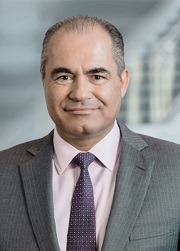
Michael Goettler |
The company says it plans to close, downsize, or divest up to 15 manufacturing facilities globally that are deemed to be no longer viable either due to surplus capacity, challenging market dynamics, or a shift in its product portfolio toward more complex products. As a result, Viatris expects that up to 20% of its current global workforce of approximately 45,000 may be impacted upon completion of the restructuring initiative. The company says it will maintain an overall employee base and global manufacturing network that aligns with its go-forward operations.
The company has thus far identified five manufacturing facilities that will be impacted: (1) three oral solid-dose manufacturing facilities respectively in Morgantown, West Virginia, Baldoyle, Ireland, and Caguas, Puerto Rico; and (2) two active pharmaceutical ingredient (API) manufacturing facilities (Unit 11 and 12) in India. The workforce reductions at the impacted sites are expected to occur in phases over the next few years (as reported on December 11, 2020). Wherever feasible, Viatris says it will seek to find potential buyers for its facilities in order to preserve as many jobs as possible. In addition, the company has identified an additional eight manufacturing sites to be closed/divested, as reported in a March 1, 2021 investor presentation. Overall, the company now has approximately 50 manufacturing sites with annual dose capacity of approximately 80 billion.
Financial expectations
Viatris issued financial guidance for 2021 and expects to achieve revenues of between $17.2 billion and $17.8 billion. “The strategic rationale for creating Viatris is as compelling today as when we announced the transaction to create this new company in July 2019,” said Michael Goettler, CEO, Viatris, in a February 21, 2021 statement when offering the financial guidance. “We launched Viatris with a TSR-[total shareholder return] focused operating model and a commitment to maintaining a strong balance sheet. As we previously stated, our company’s priorities in the first three years as we stand up Viatris will be predominately focused on rebalancing the business, generating strong and growing free cash flows, and rapidly de-leveraging.” In the March 1, 2021 investor presentation, the company noted it is targeting debt repayment of approximately $6.5 billion through year-end 2023.
Overall, the combined company has 1,400 approved molecules and 30,000 SKUs. Developed markets (excluding Japan, Australia, and New Zealand) account for 60% of its 2021 estimated revenues (Europe 33% and North America 27%) or approximately $10.5 billion. Japan, Australia, and New Zealand account for approximately 11% of its 2021 estimated revenues or $1.9 billion. Emerging markets (excluding China) account for approximately 19% or $3.3 billion, and Greater China accounts for 10% or $1.8 billion.
Focus on complex, differentiated products
Consistent with a strategic goal on positioning itself in complex and differentiated products, on a pipeline basis, approximately 75% of its pipeline value is composed of complex generics and biosimilars. In developed markets (Europe and North America), the company’s largest market segment, it has approximately 2,100 commercial products. On a pipeline basis, it has 146 products pending approval and 110 products in development in North America, and in Europe, it has 110 products pending approval and 88 products in development.