

Pharma & Tariffs: US Supreme Court Weighs In
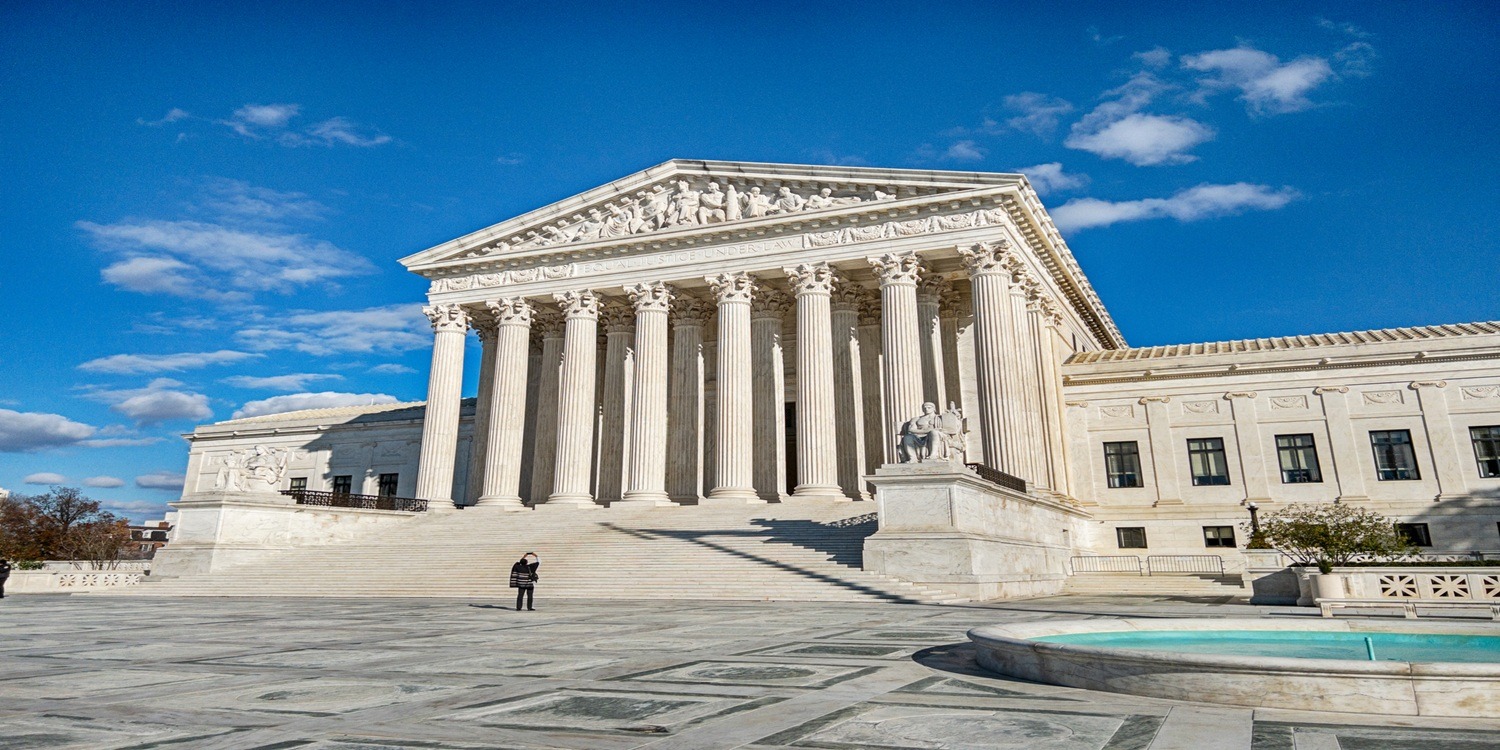
The US Supreme Court heard oral arguments in cases involving the legality of reciprocal tariffs, country-by-country tariffs imposed through a series of trade deals and executive actions. Is tariff relief a possibility or not?
By Patricia Van Arnum, Editorial Director, DCAT, pvanarnum@dcat.org
Reciprocal tariffs: the legal battle
Tariffs have been the story of the year, and this week (November 5, 2025), tariffs were once again in the news with the US Supreme Court hearing oral arguments in two cases to decide whether the current Administration have the legal authority to impose tariffs under the International Emergency Economic Powers Act (IEEPA), which was used to impose reciprocal tariffs on a country-by-country basis.
The Trump Administration first laid out a plan for imposing reciprocal tariffs in February (February 2025) to counter non-reciprocal trading arrangements with US trading partners and to improve US competitiveness, including in manufacturing. Those reciprocal tariffs were scheduled to go into effect on April 9, 2025, but the Administration placed a 90-day pause (until July 9, 2025) on their implementation to enable countries to negotiate these tariffs with the US government. The US government then extended the deadline again, to August 1, 2025, except for certain countries, which were sent letters from the White House that specified their tariffs, as the US government continued to negotiate individual deals with its trading partners. Since that time, the US has struck deals/framework agreements with key trading partners of particular relevance to the pharmaceutical industry, including the European Union, the UK, Switzerland, Japan, China, and India.

IEEPA provides the President broad authority to regulate a variety of economic transactions following a declaration of a national emergency. In 2025, President Donald Trump issued a series of Executive Orders imposing tariffs on most US imports under authority it said was provided under IEEPA and other statutory authority. This initially included certain tariffs on China, Canada, and Mexico in February 2025. Later a baseline tariff of 10% on almost all US trading partners was imposed as well as higher country-specific reciprocal tariffs, according to an analysis by the Congressional Research Service, with modifications to these tariffs several times.
Tariffs and IEEPA: what’s at stake
A key legal question is in interpreting IEEPA and that was raised by the US Supreme Court Justices in hearing oral arguments is whether the authority granted to the President, under a national emergency, under IEEPA to “regulate … importation or exportation” translates to the authority to impose tariffs. In taking executive action to impose reciprocal tariffs, the Administration did so in citing that large US trade deficits constituted an economic and national security threat. The Administration contends that under IEEPA, which provides the President the legal authority to regulate importation, it has the authority to “regulate importation” through the imposition of tariffs, which is one of the key legal issues to be addressed by the Supreme Court. The beginning of oral arguments is only the first step in the Supreme Court process as it reviews and considers these cases. Until a decision is reached, the reciprocal tariffs remain in place.
As that process evolves, several scenarios are important to note. If the Supreme Court were to strike down reciprocal tariffs, the Administration could pursue other statutes in framing a legal argument to support its authority to impose reciprocal tariffs and pursue litigation under those measures. The Administration could also move to work with Congress to impose tariffs as the legal question around the imposition of reciprocal tariffs relates to the balance of power–Congressional versus Presidential authority–to impose revenue-raising measures. Congress holds the Constitutional authority to “lay and collect taxes, duties, imposts and excises,” but also has exercised its authority to delegate some of its tariff-setting authority to the President through specific legislation, such as the Trade Act of 1974 or the Trade Expansion Act of 1962, to allow the President to impose tariffs under specific conditions and for defined periods, often related to national security or unfair trade practices. Another scenario relates to if reciprocal tariffs were not upheld by the US Supreme Court would the revenues raised from them have to be reimbursed to the parties that have paid these tariffs thus far.
Pharmaceutical industry tariffs
The legal question over reciprocal tariffs is separate from the authority to impose industry-specific tariffs, which is under consideration by the Administration for the pharmaceutical industry. The groundwork for potential industry-specific tariffs was laid earlier this year (April 1, 2025), when the US Department of Commerce initiated an investigation to determine the effects on US national security of imports of pharmaceuticals and pharmaceutical ingredients. The statutory authority for such an investigation comes under Section 232 of the Trade Expansion Act of 1962, as amended, which allows the President to impose import restrictions based on an investigation and affirmative determination by the US Department of Commerce that certain imports threaten to impair US national security. The Commerce Secretary’s report to the President is prepared within 270 days of the initiation of the investigation. For the Section 232 investigation into pharmaceuticals, such a report would be required no later than December 27, 2025. After the Commerce Department issues its report, the President can concur or not with the Commerce Secretary’s recommendations, and take action to “adjust the imports of an article and its derivatives” or other non-trade related actions as deemed necessary. If the Commerce Secretary determines that there is no threat to US national security, no further action is taken. If the Commerce Secretary determines that there is such a threat, the President has up to 90 days to decide (1) whether to concur with Commerce’s determination; and (2) if concurring, whether to act. If the President opts to act, the President has 15 days to implement actions. Within 30 days after deciding whether or not to take action, the President must submit a written statement to Congress providing the reasons for that decision.
Deal-making: exemptions for Section 232 tariffs
The prospect of pharmaceutical-industry tariffs has loomed over the industry since the initiation of the Commerce Department investigation and has been reinforced by comments made by the Administration. However, the Administration is taking a position in negotiating exemptions for Section 232 tariffs on a deal-by-deal basis with pharmaceutical companies. Pfizer was the first company to strike such as deal. In September (September 2025), the White House and Pfizer announced that they had reached an agreement under which Pfizer would have a three-year grace period for any tariffs under Section 232 of the Trade Expansion Act of 1962, conditioned on Pfizer increasing US-based capital investment, a key policy objective in the Administration’s trade/tariff policy. In announcing the agreement, Pfizer said it is committing an additional $70 billion dedicated to US research, development, and capital projects in the next few years (as reported on September 30, 2025), which the company says builds on more than $83 billion in US investment from 2018-2024. Pfizer currently has a US workforce of 31,000 employees supported by 13 manufacturing and distribution sites and seven major R&D facilities in the US, according to the company.
The Pfizer agreement also addresses another policy goal of the Administration: most-favored-nation drug pricing. The agreement with Pfizer represents the first agreement with the Administration and a major pharmaceutical company to implement measures for most-favored-nation drug pricing.
The premise behind most-favored-nation drug pricing is that the US pays higher prescription drug costs comparative to other developed countries and therefore assumes a larger share of the costs of drugs and that measures should be taken to reduce the differential in the prices of prescription drugs in the US compared to other developed countries, where prescription drug prices are lower. Under its agreement with the US government, Pfizer has voluntarily agreed to a price framework under which prices of its drugs in the US are comparable to drug prices to those available in other developed countries and that pricing newly launched medicines are at parity with other key developed markets. Pfizer will also participate in a direct purchasing platform, TrumpRx.gov, which will allow US patients to purchase medicines from Pfizer at a discount. Pfizer says that a large majority of the company’s primary care treatments and some select specialty brands will be offered at savings that will range as high as 85% and on average 50%.
Last month (October 2025), AstraZeneca became another company to strike a deal with the Administration to receive an exemption if pharmaceutical-industry specific tariffs were to be imposed under Section 232. If such industry tariffs were to be imposed, AstraZeneca reached an agreement with the US Department of Commerce to delay Section 232 tariffs on the company for three years, which the company says would enable it to fully onshore medicines manufacturing so that all of its medicines sold in the US are made in the US. This will be achieved through the company’s recently announced $50-billion investment in US medicines manufacturing and R&D over the next five years to help deliver on the company’s overall goal of achieving $80 billion in total revenue by 2030, 50% of which is expected to be generated in the US. In addition, as part of an agreement with the US government with respect to drug pricing, AstraZeneca will provide direct-to-consumer (DTC) sales to eligible patients with prescriptions for chronic diseases at a discount of up to 80% off list prices. AstraZeneca will participate in the TrumpRx.gov direct purchasing platform, which will allow patients to purchase medicines at a reduced cash price from the company.
Lilly and Novo Nordisk: Latest companies to strike a deal
This week (November 6, 2025), Eli Lilly and Company and Novo Nordisk became the latest companies to strike a deal for Section 232 tariff exemptions and drug pricing. Lilly announced that it will receive three years of tariff relief and will not be subject to future pricing mandates based on its previously announced commitment to invest more than $50 billion in the US manufacturing to boost domestic production in key therapeutic areas as well as to expand access and reduce pricing for its obesity and Type 2 diabetes drugs and maintain reduced pricing for its insulin products.
Under the agreement, starting in April 1, 2026, Medicare beneficiaries will pay no more than $50 per month for Zepbound (tirzepatide), available in a multi-dose pen, and for orforglipron, Lilly’s once-daily obesity pill, both pending approval from the US Food and Drug Administration (FDA). States will also have the ability to expand access to Zepbound and orforglipron through Medicaid. Medicare is the US federal government healthcare program for individuals 65 or older, and Medicaid is the US federal government for low-income individuals.
Zepbound was approved by FDA in November 2023 for chronic weight management and received a second approval on in December 2024 for treating moderate-to-severe obstructive sleep apnea in adults with obesity and is now delivered through once-weekly subcutaneous injection in single-dose formats. Orforglipron is Lilly’s first oral, small-molecule glucagon-like peptide-1 receptor agonist for which the company expects to submit to global regulatory agencies for obesity by the end of 2025. In the US, Lilly applied for the Commissioner’s National Priority Voucher for orforglipron, potentially accelerating FDA approval. The Commissioner’s National Priority Voucher is a pilot program that was announced in June 2025 to reduce drug and biological product application or efficacy supplement review times for certain drugs from 10-12 months to 1-2 months.
Upon FDA approval, self-pay patients living with obesity will be able to access Zepbound and orforglipron through LillyDirect’s self-pay pharmacy channel. Zepbound multi-dose pen will be available at the lowest dose at $299, with additional doses up to $449 representing a $50 discount to current direct-to-patient prices; priced similar to what is available in Europe. When patients refill their multi-dose pen prescription on the LillyDirect digital health platform, they will pay no more than $449. Orforglipron will be available with the lowest dose starting at $149 with additional doses up to $399. The scope of the agreement does not include pricing obligations in the commercial channel.
Lilly’s Emgality (galcanezumab-gnlm), Trulicity (dulaglutide), and Mounjaro (tirzepatide) will be added to LillyDirect and made available for self-pay patients with pricing 50-60% off their current list prices. Lilly will also continue to offer insulin at no more than $35 per month out-of-pocket, whether a person has commercial insurance or no insurance. In 2020, Lilly partnered with the Trump Administration on a pilot program that paved the way for Lilly to be the first company to cap out-of-pocket insulin costs at $35 per month.
Novo Nordisk also announced an agreement with the Admiistration to lower drug prices beginning in 2026 and expand patient access and affordability for semaglutide medicines, including Wegovy and Ozempic, respectively for treating obestity and Type 2 diabetes, in US Medicare Part D and Medicaid and in direct-to-patient cash channels. Medicare Part D coverage, which applies to outpatient prescription drugs, for anti-obesity medicines will be enabled through a pilot program designed to cover a majority of Part D beneficiaries. In return, Novo Nordisk is expected to receive a three-year tariff exemption.