


Sanofi’s New CEO Highlights Pipeline Prioritization

In her first earnings report since becoming CEO of Sanofi in late April, Belén Garijo laid out an accelerated transformation roadmap for the company that focuses on the company’s commercial strengths but also the need for R&D and pipeline improvements.
By Patricia Van Arnum, Editorial Director, DCAT, [email protected]
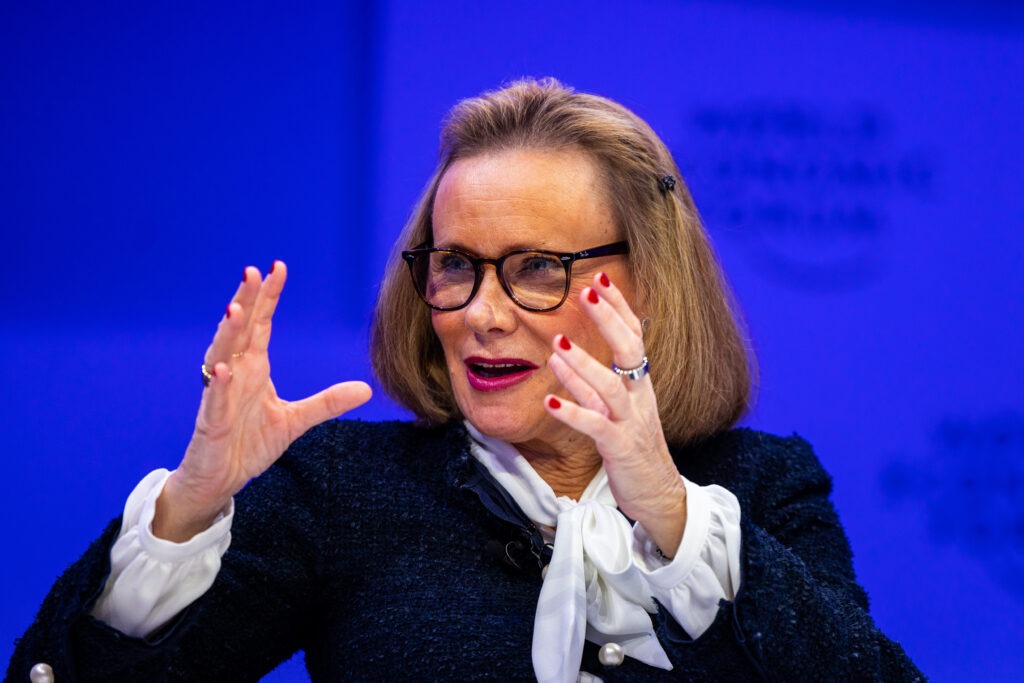
The strategic priorities at Sanofi
Only at the helm for a few months, Belén Garijo, CEO at Sanofi, has begun the task of revitalizing and prioritizing the company’s pipeline to drive new product growth and diversify the company’s portfolio. “My first months as CEO have focused on assessing the challenges facing Sanofi and working on an accelerated transformation roadmap that leverages our commercial strengths and focuses on the need for R&D and pipeline improvements,” said Garijo, in an July 30, 2026, statement, in announcing the company’s second-quarter/first-half 2026 results. “We have taken the first decisive steps on pipeline prioritization and recently, we appointed a focused Executive Committee aligned with the strategic priorities.”
Garijo, formerly Chair of the Executive Board and CEO of Merck KGaA, took the helm of Sanofi in late April (April 29, 2026) as CEO. She faces the task of driving revenue growth through increased product diversification and R&D productivity as the company remains heavily reliant on its top-selling product, Dupixent (dupilumab), a drug for treating multiple inflammatory diseases. She succeeded Sanofi’s former CEO, Paul Hudson, who stepped down from the company in February (February 2026).

Sanofi reported first-half 2026 revenues of EUR 22.11 billion ($25.46 billion), a 11.1% gain year over year and a 15.7% gain at constant exchange rates (CER). Dupixent continues to be the company’s top-selling product and key revenue contributor, accounting for 42% of the company’s first-half 2026 sales with sales of EUR 9.32 billion ($10.73 billion) a 34.4% gain year over year at CER. Garijo said that Dupixent will continue to be the key revenue contributor for the company with projected annual sales projected to reach around EUR 25 billion ($28.79 billion) in 2030. Dupixent, which was co-developed and co-commercialized with Regeneron Pharmaceuticals, a Tarrytown, New York-base bio/pharmaceutical company, generated net sales of EUR 15.71 billion ($18.10 billion) in 2025, representing 36.0% of Sanofi’s net sales for 2025.
Key for Sanofi is how it will navigate loss of exclusivity for Dupixent in the mid-term and its biosimilars defense strategy and how effective it can replenish its commercial and pipeline with other products. The primary US compound patent for Dupixent expires in March 2031. The company noted it has a “vigorous defense planned” with expectation to protect Dupixent innovations beyond the US compound patent expiration through a “robust” patent portfolio of issued patents and pending applications with expiration dates from 2031 to 2045.
The real test for Sanofi, however, will be how new/recent product launches will garner increased revenue for the company. In its earnings release for the second quarter/first-half 2026, the company projects that recent/new product launches will reach approximately EUR 10 billion ($11.5 billion) by 2030.
The company’s rare-disease franchise has two recent products that show promise: ALTUVIIIO, (antihemophilic factor recombinant, Fc-VWF-XTEN fusion protein-ehtl, previously referred to as efanesoctocog alfa), and Nexviazyme/Nexviadyme (avalglucosidase alfa-ngpt), which posted blockbuster sales (defined as sales of $1 billion or more) or near blockbuster status in 2025.
ALTUVIIIO is a factor VIII replacement therapy for routine prophylaxis and on-demand treatment to control bleeding episodes for adults and children with hemophilia A. It had 2025 sales of EUR 1.16 billion ($1.35 billion) and first-half 2026 sales of EUR 674 million ($776 million). Nexviazyme/ Nexviadyme, an enzyme-replacement therapy for treating Pompe disease, a rare, inherited metabolic disorder, had 2025 sales of EUR 790 million ($924 million) and first-half sales of EUR 426 million ($491 million). Also on the potential upside in its rare-disease portfolio is Ayvakit (avapritinib), which Sanofi gained via its $9.5-billion acquisition of Blueprint Medicines in 2025. The drug is approved for treating adults with indolent or advanced systemic mastocytosis, a rare blood cancer, and specific gastrointestinal stromal tumors. It posted first-half 2026 sales of EUR 367 million ($423 million).
Emphasis on pipeline prioritization
In terms of its pipeline, Garijo emphasized the need for pipeline prioritization. Overall, Sanofi has 61 projects in its pipeline across its three main areas (immunology, rare diseases, and vaccines) and selective candidates in the disease areas of neurology and oncology, which overall includes 36 potential new medicines and vaccines.
One of the key moves made by Garijo was naming a new Head of Research and Development. Last month (June 2026), Sanofi named Paulo Fontoura, MD, PhD, an ex-Roche executive and currently Chief Medical Officer at Xaira Therapeutics, a South San Francisco, California-based company focused on applying AI and machine learning in drug discovery and development, as Executive Vice President, Global Head of Research & Development Pharma, effective September 1, 2026. He will be a member of Sanofi’s Executive Committee, based in Paris, and will report to Garijo.
Xaira Therapeutics was launched in 2024 and was co-founded by current Chairman and CEO, Marc Tessier-Lavigne, formerly Executive Vice President for Research and Chief Scientific Officer at Roche’s Genentech and formerly President of Rockefeller University and Stanford University. The company’s other co-founder, is David Baker, PhD, co-recipient of the 2024 Nobel Prize in Chemistry for his work in computational protein design and the Director of the Institute for Protein Design at the University of Washington. Prior to joining Xaira, Fontoura spent more than 15 years at Roche, where he held a series of senior leadership positions culminating as Senior Vice President and Global Head of Clinical Development for Neuroscience, Immunology, Ophthalmology, Infectious and Rare Diseases.
In its second-quarter/first half 2026 earnings call, Sanofi highlighted some recent decisions it has made as part of a strategic assessment of its pipeline. The company reported earlier this month (July 2026), the discontinuation of clinical development of amlitelimab, an OX40-ligand monoclonal antibody, in moderate-to-severe atopic dermatitis (eczema). A Phase II study of amlitelimab in celiac disease is ongoing and expected to read out in the second half of 2026. Amlitelimab was acquired by Sanofi as part of its $1.1-billion acquisition of the UK-based bio/pharmaceutical company Kymab in 2021.
Sanofi also reported this month (July 2026) that it has discontinued clinical development of two-late stage candidates, itepekimab and balinatunfib. Itepekimab, which was being co-developed with Regeneron, was discontinued in chronic obstructive pulmonary disease and chronic rhinosinusitis. It also discontinued programs for balinatunfib in Phase II development for Crohn’s disease and ulcerative colitis.
Sanofi said it will continue development of duvakitug, which it is progressing in collaboration with Teva Pharmaceutical. Teva and Sanofi are collaborating to co-develop and co-commercialize duvakitug for the treatment of ulcerative colitis and Crohn’s disease. Each company will equally share the development costs globally, and the net profits and losses in major markets, with other markets subject to a royalty arrangement. Sanofi is leading the Phase III clinical development program. Teva will lead commercialization of the product in Europe, Israel, and specified other countries, and Sanofi will lead commercialization in North America, Japan, other parts of Asia, and the rest of the world. In March (March 2026), Teva reported that the investment firm, Blackstone Life Sciences, will provide $400 million to support the development of duvakitug, in return for regulatory and commercial milestones as well as royalties on duvakitug worldwide sales if approved.