
CDMO Insights: What’s Trending in the Injectable Drug Market?

GPL-1s for treating Type 2 diabetes and obesity have been a key growth driver for the bio/pharma industry as well as for CDMOs of injectables, but will the entry of oral GLP-1s and related drugs put a damper on growth prospects for injectables? What is the expected market penetration?
Injectables: the growth drivers
One of the key growth drivers for the injectables drug market and in turn for CDMOs of injectables has been the blockbuster success of the glucagon-like peptide-1 (GLP-1) and related drugs for treating Type 2 diabetes and obesity, with the obesity indication being the large contributor to growth. With the market entry of oral GLPs and others in the pipeline, will that growth continue?
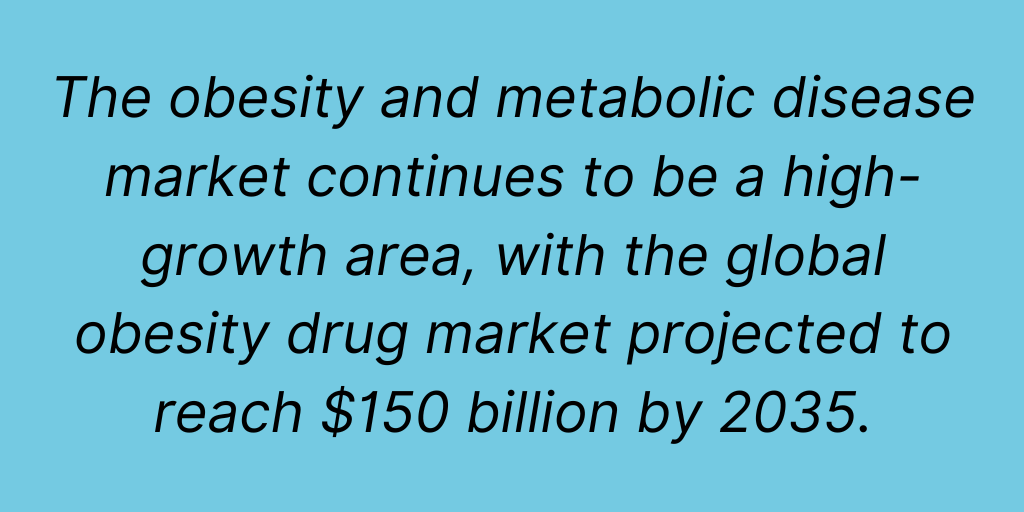
The obesity and metabolic disease market continues to be a high-growth area, with the global obesity drug market projected to reach $150 billion by 2035, according to a recent analysis by Clarivate, a business intelligence firm serving the bio/pharmaceutical industry. GLP-1 agonists, used to treat Type 2 diabetes and obesity, have been the industry’s success stories with Novo Nordisk riding a blockbuster wave with Ozempic/Wegovy (semaglutide), respectively for treating Type 2 diabetes and obesity, and Eli Lilly and Company also riding the wave with Mounjaro/Zepbound (tirzepatide), a dual-activating GIP (glucose-dependent insulinotropic polypeptide) and GLP-1 medication, respectively for treating Type 2 diabetes and obesity.
Lilly in particular continues to benefit from the strength of Mounjaro/Zepbound. Mounjaro’s first-quarter 2026 revenues were $8.7 billion, and Zepbound reached revenues of $4.2 billion. More success is projected in the near term for Lilly’s Type 2 diabetes/obesity drug franchise with Foundayo (orforglipron), an oral obesity drug approved by FDA in April (April 2026) and in late-stage development for treating Type 2 diabetes. Foundayo is a once-daily small-molecule (non-peptide) oral GLP-1 receptor agonist (RA). Analysts project blockbuster potential (defined as sales of $1 billion or more) for the drug with the oral administration being a key driver for revenue potential. In a recent analysis, Clarivate projects sales of orforglipron of $11.1 billion for obesity in G7 markets (Canada, France, Germany, Italy, Japan, the UK, and the US) in 2031, and $5.2 billion in expected sales for Type 2 diabetes in the G7 markets in 2031. Orforglipron is the first oral, non-peptide, small-molecule GLP-1 RA to be approved. It can be taken without food or water restrictions at any time of the day. As such, it represents a breakthrough in convenience and accessibility compared with injectable alternatives, according to the Clarivate analysis.

In launching orforglipron, Lilly will be competing with Novo Nordisk and its oral obesity drug, oral semaglutide, the same active ingredient as in its injectable obesity drug, Wegovy, and injectable Type 2 diabetes drug, Ozempic. The GLP-1 drug received FDA approval in late December 2025 and was launched in the US in January (January 2026). Novo Nordisk already had an oral version of semaglutide, the active ingredient in Ozempic and Wegovy, on the market in Rybelsus, which was first approved in 2019, but that is indicated for treating Type 2 diabetes, not obesity.
Last year (2025), Novo Nordisk had sought to further position itself in the obesity drug market with a bid to acquire Metsera, a New York-based clinical-stage bio/pharmaceutical company focused on obesity and cardiometabolic diseases, eventually losing a bidding war with Pfizer, which acquired Metsera last November (November 2025) in a deal worth up to $11 billion. Metsera’s portfolio included both oral and injectable incretin, non-incretin, and combination therapy candidates, with four programs in clinical development and several programs with investigational new drug-enabling studies ongoing. These included MET-097i, a weekly and monthly injectable GLP-1 RA; MET-233i, a monthly amylin analog candidate being evaluated as a monotherapy and in combination with MET-097i; an oral GLP-1 RA candidate in early-stage development; and additional preclinical nutrient-stimulated hormone therapeutics. Pfizer’s move to acquire Metsera followed recent setbacks in Pfizer’s in-house drug candidates for obesity. Pfizer discontinued development of two GLP-1 RAs: lotiglipron in 2023 and danuglipron in 2025.
Among the bio/pharma majors, Roche is advancing an oral GLP-1 receptor agonist for obesity, CT-996, which it gained through its 2024 acquisition of Carmot Therapeutics, a Berkeley, California-based bio/pharmaceutical company, in a deal worth up to $3.1 billion ($2.7 billion at closing plus $400 million in potential milestone payments). The acquisition provided Roche with three clinical-stage assets with potential in treating obesity and diabetes: as previously mentioned, CT-996, a once-daily oral small-molecule GLP-1 receptor agonist for treating obesity in patients with and without Type 2 diabetes, as well as two injectable clinical drug candidates: CT-388, a once-weekly subcutaneous injectable for treating obesity in patients with and without Type 2 diabetes, and CT-868, a once-daily subcutaneous injectable, for treating Type 1 diabetes patients with overweight or obesity.
AstraZeneca and Eccogene, a Shanghai, China-based bio/pharmaceutical company are partnered for Eccogene’s elecoglipron, an investigational oral, once-daily small-molecule GLP-1 RA, for obesity. AstraZeneca reported earlier this month (June 2026) that AstraZeneca is advancing elecoglipron into an Phase III program in obesity and Type 2 diabetes, including cardiovascular and kidney outcome trials.
An important question is will oral GLPs and related drugs erode the strength of the injectables market? Certain estimates project that the oral GLPs market will constitute 25% to 35% of the global GLPs market by 2030. Although cutting into the market share of injectable GLPs-1 and related drugs, injectables still hold strong.
A case in point for the continued strength of the injectables drug market is Lilly’s retatrutide, in late-stage development for treating obesity and Type 2 diabetes. Retatrutide, a once weekly injectable, has projected revenues of $10 billion for obesity in the G7 markets in 2031, and $20.1 billion in expected sales for Type 2 diabetes in the G7 markets in 2031. Retatrutide is once-weekly triple hormone receptor agonist that activates the body’s receptors for GIP, GLP-1, and glucagon. Lilly is studying retatrutide in several Phase III clinical trials to evaluate its potential efficacy and safety in obesity and overweight with at least one weight-related medical problem, Type 2 diabetes, knee osteoarthritis pain, moderate-to-severe obstructive sleep apnea, chronic low back pain, cardiovascular and renal outcomes, and metabolic dysfunction-associated steatotic liver disease.